Click the like button if you’re interested in learning part of this sax solo. I thought it was pretty cool, learned it by ear. Spent a little time on it.
Let me know if you’re interested by clicking the like button/google+ button, etc. Thanks!
Click the like button if you’re interested in learning part of this sax solo. I thought it was pretty cool, learned it by ear. Spent a little time on it.
Let me know if you’re interested by clicking the like button/google+ button, etc. Thanks!
In college I took sax lessons with with Kristen Strom, known for being in San Francisco’s Nuclear Whales sax quartet and more recently for leading her own group.
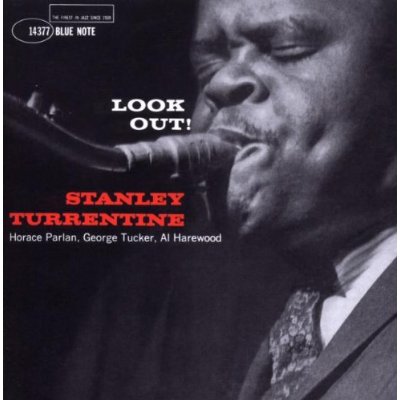
Stanley Turrentine
She has a lot of funny stories from her life as a musician. One day at a lesson, I turned to Stanley Turrentine’s “Sugar” to practice for a performance and she told me about how Turrentine’s dad made little Stanley play only one note per day for a while.
Probably not too much fun to do that, but it helped him get an incredible sound on all the notes.
I got a cassette tape with “Sugar” on it when I was about 12 years old and have always liked that song. Lately I’ve been working on transcribing some of Turrentine’s solos. Coming back to Turrentine’s solo on Midnight Special from the album with Jimmy Smith and from a few of his other pieces. Learned a bit from The Hustler.
You’ll find that some of his solos definitely extend into the altissimo range. Just something to be aware of.
I like Stanley Turrentine because of the soul he puts into the music, you can really hear the emotion.
The greatest saxophone player of all time…..
Certainly up for debate. But a number of saxophone players are definitely contenders.
Saw a poll on Sax on the web about who the greatest sax player ever is. Here are their results:
| Charlie Parker | 48 | 27.75% |
| Ornette Coleman | 0 | 0% |
| John Coltrane | 38 | 21.97% |
| Brecker | 18 | 10.40% |
| Mule and Rascher | 10 | 5.78% |
| Branford Marsalis | 3 | 1.73% |
| Lester Young | 11 | 6.36% |
| Plas Johnson | 1 | 0.58% |
| Cannonball Adderley | 14 | 8.09% |
So Charlie Parker and John Coltrane get the top two spots. Makes sense. The other players on the list certainly sound great as well. Who do you think should also rank in the top tiers?
A few more contenders I would add to the list of possibilities would be-
Coleman Hawkins
Stanley Turrentine
Stan Getz
Sonny Stitt
Joe Henderson
Dexter Gordon
James Moody
Paul Desmond
Hank Mobley
Eddie Harris
Wayne Shorter
Sonny Rollins
Grover Washington Jr.
Benny Carter
Gene Ammons
Maceo Parker
Eddie ‘Lockjaw’ Davis
King Curtis
Jimmy Heath
Jr. Walker
Louis Jordan
Gerry Mulligan
Illinois Jacquet
Earl Bostic
Johnny Hodges
Art Pepper
Some of these I like personally, my favorite is Stanley Turrentine. Others were suggested by visitors to Sax Station.
Feel free to add a comment of your own.
It’s somewhat a question of taste. Charlie Parker and John Coltrane were pioneers of bebop though.
Another question might be who you think the greatest living saxophone player is.
He comes from Chile. And naturally tends to look pretty epic. He is a sax man after all.
 Erskine asked,
Hi Neal , Would explain the II, V I concept in jazz music
Thanks.
Here is part of the explanation, leave a comment if you have some more ideas on it!
The ii V I progression ‘pulls’ your ear towards the next piece. It moves towards ‘resolution’ as we hear it. You may want to try playing the ii V I progression on a piano or guitar to get a better feel for it. Though, almost invariably, you have heard the ii V I progression in music.
If we break the components down, the roman numerals correspond with numbers, but it gives us another set of numbers to use (more options for notation).
If you take a major scale, you can use a number (roman numeral) for each note. And you can build chords and scales starting from each of the seven notes in the major scale.
The progression of ii V I would have chords built on the second note, fifth note, and first note. In C major, that would be D, G, and C respectively.
Those chords only use the notes from the original major scale.
Because of the intervals between the notes in the chords, the movement seems to flow right from ii to V to I, this has to do with the closeness of the notes.
If we look at seventh chords, notes with four chords, here are the notes for the ii V I in C major.
ii: D, F, A, C
V: G, B, D, F
I: C, E, G, B
The C in the ii chord is a half step away from the B in the V chord. The F in the V chord is a half step away from the E in the I chord and the B in the V chord is also a half step away from the C in the one chord. (the other two notes stay the same).
That’s part of the answer at least!
Drawing of Sonny Rollins by EvilHairDay. Saw Sonny Rollins at the Monterey Jazz Festival this last year. He still puts on a great performance!
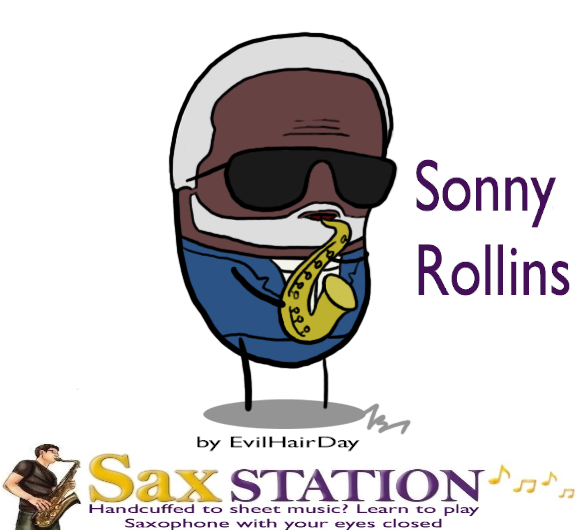
Sonny Rollins
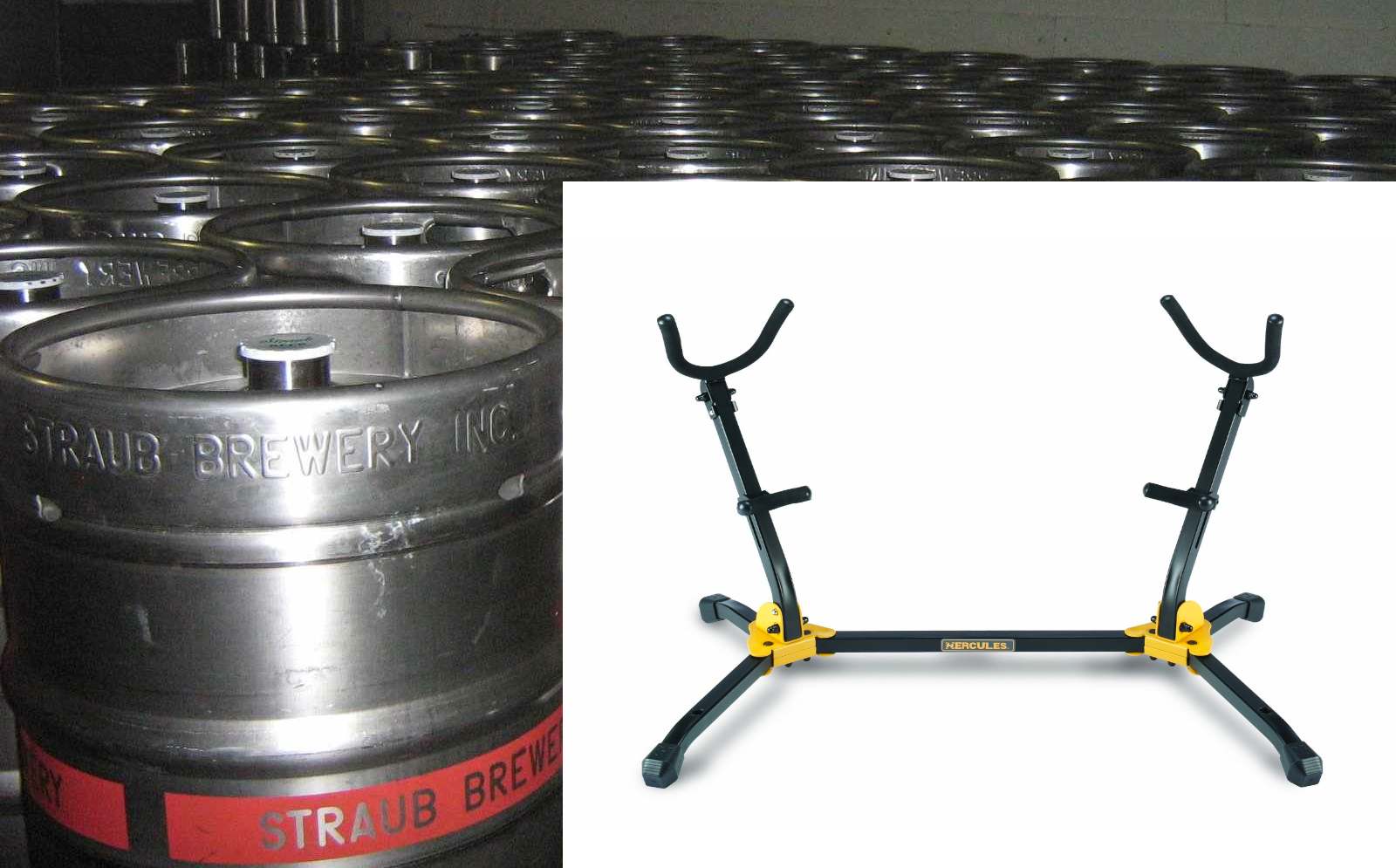
Saxophone stand! More Functional Than a Keg Stand
Well, maybe that last one doesn’t belong in the list…..
The other night at a gig I was looking at my sax stand and how it wobbled. It had done that for years. Was a little annoying, but didn’t seem to really matter. It worked and it has a couple of spots to put in pegs for flute and clarinet which I use sometimes. But I decided to look at it more closely.
It turned out that one of the metal legs was bent and that made it not rest evenly on most surfaces. Unless those surfaces happened to be the correct slant to line up with it.
I had tried to bend it back before, but it’s not that easy to bend somewhat thick metal, so it didn’t quite work out.
That night I decided to use a little leverage, have the metal legs out, hold it by the opposite leg and push at the tip of the bent leg. The physics of the situation caused my force to do more and I actually unbent the sax stand. A moment of triumph. Not sure why I didn’t do it years before.
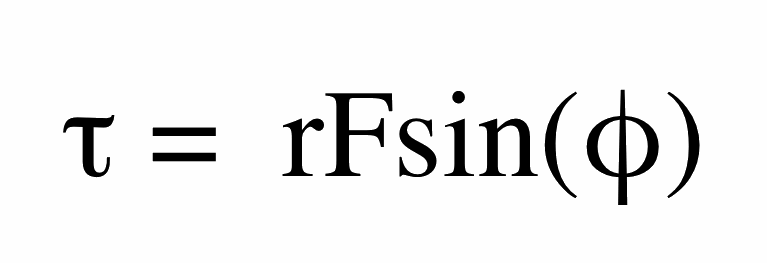
Tau (torque) = lever length x force x sin of the angle between force and object
Another issue with my stand is that while it works for tenor + flute and clarinet both even, it doesn’t really hold an alto sax too well. The proportions aren’t quite right.
Now that I’m playing more than one saxophone….
It came to my attention that my friend had a pretty spiffy looking Hercules Double Alto/Tenor Sax Stand
that could hold both an alto sax and a tenor sax. He had the Hercules stand.
I have seen some other friends who are musicians with them.
Was thinking about getting one of those.
Any thoughts on your sax stand? The good and bad? Leave a comment!
Want a Saxophone CD? To listen to, give to someone, or learn from?
 You probably want it to not be terrible.
On amazon, ‘saxophone cd’ had 2,552 results in the music section when I last checked.
The first one that comes up is Best of Jazz Saxophone by Various Artists!!
Sounds awesome right? I love the Various Artists Band, they always rocks the live shows.
Or maybe you want a real saxophone cd, by a saxophonist?
Something like Just in Case You Forgot How Bad He Really Was
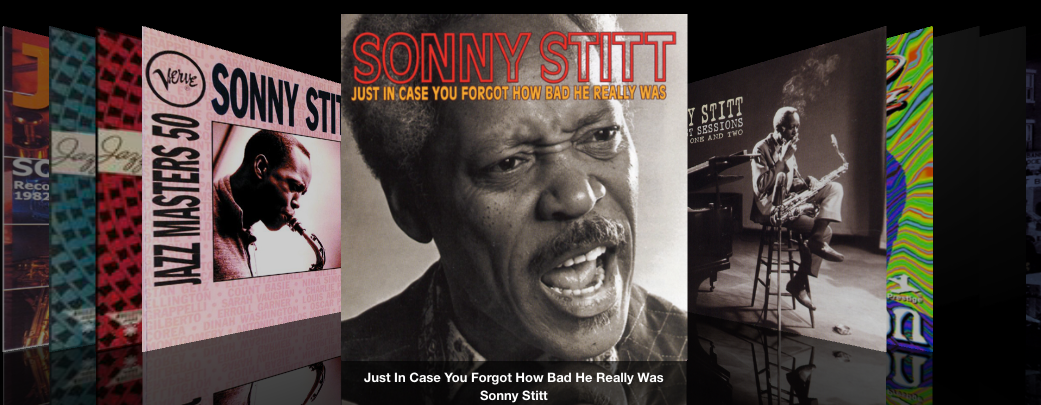
Heard this particular saxophone CD being played on a shuttle going to the airport and then ordered it later. Driver happened to know his jazz.
So wasn’t an automatic search that found it.
Amazon can be pretty helpful though, you’ll see reviews once you get to an actual CD. But finding that saxophone cd in the first place isn’t laid out so simply, you need to know a little about what you want beforehand. Which sax players are good, which albums you might like, etc.
In my case, since I play saxophone, relatives have several-ish times given me saxophone cds as gifts. Sometimes they’re cool. Other times it’s a CD with a saxophone on it and doesn’t have many other redeeming qualities. Your relatives have good intentions! (probably) But they don’t always know what they’re doing when selecting a saxophone cd.
If you’re reading this post, you probably play saxophone, but if you don’t, check out the list of players on Greatest Saxophone Player of All Time? and the comments. And listen to the players before you get something! Youtube, samples on iTunes, there are options.
‘Best of’ sometimes are good… but not necessarily. Don’t take that phrase at face value.
There are a ton of great saxophone CDs out there. Lots of styles and different flavor.
Some of the my favorite jazz recordings with saxophone include these ones, click on the images to check them out. Other CDs with these musicians tend to be good too!

5 Stars – Excellent …Rollins displays humor, gentleness, a delicate feeling for beauty….I find this entire album excellent on all counts and for all persons concerned. -Down Beat

1. So What
2. Freddie Freeloader
3. Blue In Green
4. All Blues
5. Flamenco Sketches
6. Flamenco Sketches (Alternate Take)
Time Out with the song ‘Take Five’ by Paul Desmond. Dave Bruebeck on piano.

Stanley Turrentine’s ‘Sugar’. My favorite saxophone player. He’s got soul. I’ve got a ton of his recordings.
John Coltrane’s A Love Supreme. Masterpiece. Not exactly easy listening though.
Joe Henderson’s ‘Page One’. Another one of my favorite sax players. His debut as a band leader. I really like his recording of Blue Bossa1. Blue Bossa
2. La Mesha
3. Homestretch
4. Recorda Me
5. Jinrikisha
6. Out Of The Night
What’s your favorite saxophone CD? Leave a comment!
As you learn the saxophone, method books and other sax books can be a great way to systematically work on playing the instrument. Here are a few books that I have used and recommendations on the appropriate order to work on them. But remember that you should definitely listen to saxophone players and other music in addition to working through books! Ideally you want to play in groups and get private lessons if you can afford them too.
Beginning Saxophone
 Rubank Elementary Method – Saxophone
Progressive method book for saxophone. Starts slowly with notes, exercises, melodies. I would use a fingering chart like the one on Sax Station though.
Good book to start working on improvisation. Comes with a CD that has a backing band that you can play along with. The melodies are simplified a bit and the chords are not overly complex.
Intermediate
 Rubank Intermediate Method Saxophone
Continuation of the Rubank Method. More challenging exercises, scale studies, and melodies. Good book to work through.
Scales and chords throughout the full range of the saxophone. I used this book to warmup and work on my scales/chords for a good while.
Playing duets with another sax player can be a lot of fun. This book in particular is challenging, but the lines weave together well and make some cool music.
Advanced Jazz Conception for Saxophone: 20 Jazz Etudes
Jazz Conception for Saxophone Duets
Aebersold Series
Real Books:
The Real Book: Sixth Edition
Useful resource for learning jazz tunes
The Real Book (B Flat, Sixth edition – for soprano/tenor sax
The Eb Real Book, Sixth Edition
Volume 16 – Turnarounds, Cycles & ii/V7s to get familiar with the harmonic cycles in music
Advanced
General
The Music Lesson

Rubank Advanced Method – Saxophone Vol.1
Rubank Advanced Method – Volume 2 (Saxophone)
A more advanced book that was actually written for oboe can be played on saxophone (on the cover it states ‘for oboe or saxophone’ for a greater challenge.
Small Book
Art of Saxophone Playing – Larry Teal
Greg Fishman’s Books:
Jazz Saxophone Etudes For Alto & Tenor: Book & Two CD Play-Along Set
Jazz Saxophone Etudes, Volume 2
Jazz Saxophone Etudes, Volume 3
Volume 64 – Salsa Latin Jazz, to play some Latin music, check this book out, it’s not at a beginning level and some of the tunes are fast.
–The Jazz Theory Book. Definitive resource for harmonic theory in jazz, by Mark Levine. Playing some piano will help you understand this book.
Patterns For Improvisation By Oliver Nelson,
Charlie Parker: Charlie Parker Omnibook – E-flat, for alto saxophone and baritone saxophone
Charlie Parker: Charlie Parker Omnibook – B-flat for tenor saxophone and soprano saxophone
What do you think of these books and what sax books have you used that helped you?
Clip from a show we played a few weeks back at Agenda. That was a fun night! As I have played more salsa, I started simplifying my note choices and getting into the groove more. I think, especially in a setting like this for dancers, the groove is more important than complex harmony, but as you are able to groove better you can get more interesting note choices in there and keep grooving.
Of course what I wrote above is not a step by step guide. But simplifying what you play is an important piece. Really listening is another part of it. And for salsa, knowing how to dance can help. A solo with one note can sound better than a much more harmonically complicated solo, depending if the other dimensions of music are happening.
One of the greatest saxophone players. He influenced many musicians and helped pioneer bebop. In 1958, jazz critic Ira Gitle, coined the phrase ‘sheets of sound’ to describe his music. He played a lot of fast music, but also some beautiful ballads. “Naimia” is a great song by Coltrane, named after Juanita Naima Grubbs – his wife at the time.

Want to play saxophone, but feeling lost and not sure how to get started?
In this online/downloadable class you will see methodical lessons in a sequence and you can get feedback and ask questions at any point.
Learn more
Want to take your playing to the next level?
You’ll learn fundamental saxophone skills, building past the basics. Master rhythms. Learn about phrasing, tone, and more. Here you will get feedback which is crucial to developing good habits.
Learn more


 Volume 54 – Maiden Voyage
 Jackie McLean Warm-up
 Saxophone Bop Duets


